
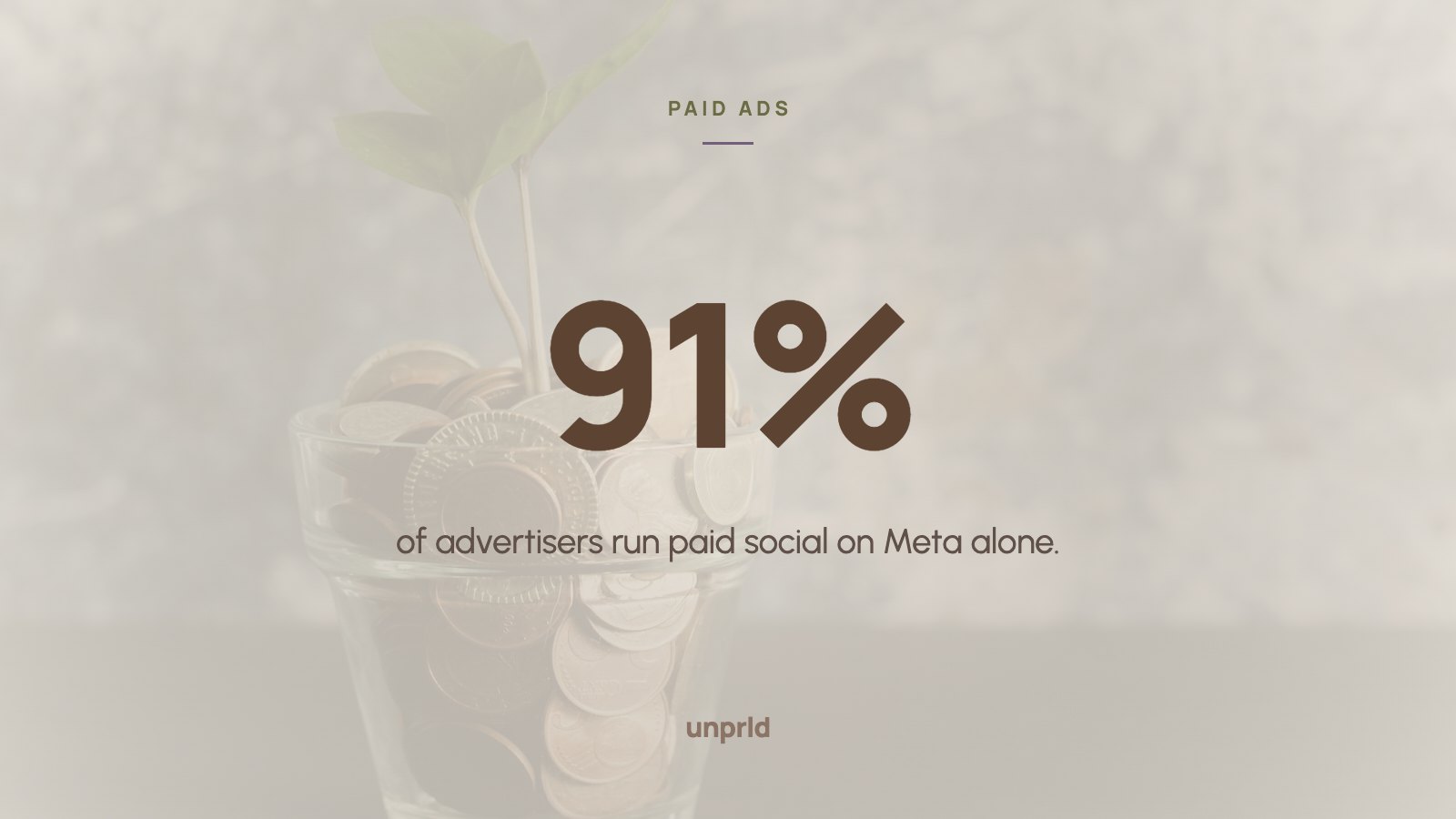
Most South African businesses running paid social put every rand into Meta and never look sideways. Metricool’s newest study, drawn from 628,969 Meta and TikTok campaigns and $471 million in tracked ad spend between January and June 2026, puts a number on just how one-sided that habit has become: 91% of advertisers in the dataset run their paid social on Meta alone. Only a sliver test TikTok, and fewer still run both.
That loyalty isn’t irrational. Meta earns it in the metric that matters most once someone clicks: efficiency. The platform delivers 10.8 interactions for every dollar spent, against TikTok’s 8.2. If you’re chasing engagement per rand, Meta still does more with less.
But the study’s headline number sits on the other side of the funnel. A click on TikTok costs $0.03, against roughly $0.07 on Meta, and TikTok campaigns in the dataset pulled in close to eight times the clicks for the budget spent. Cost per lead follows the same pattern: $2.69 on TikTok against $6.00 on Meta. However you weigh those numbers, they don’t point to “TikTok is better.” They point to two platforms doing genuinely different jobs at genuinely different prices, and most advertisers only ever testing one of them.
Where the budget actually goes
There’s a second finding in the report worth sitting with longer than the platform comparison: 70% of the ad budget Metricool tracked goes to the bottom of the funnel, chasing the sale directly, rather than building reach or awareness first. Meta’s average return on ad spend has also slipped from 5.48x to 4.57x year on year. Put together, that’s a market where most budgets are aimed at the same narrow target, immediate conversion, on one platform, at a moment when that target is getting more expensive to hit.
What it means for a South African business
For an SME weighing up its Meta and TikTok spend, the honest reading of this data isn’t “switch platforms.” It’s that the case for testing TikTok as a second channel, even at a modest budget, has gotten stronger. Not because it beats Meta on quality, but because it’s cheap enough to test properly. Whether that volume converts as well as your Meta audience is a question only your own numbers can answer, which is exactly why it’s worth running as a test rather than a switch.
The funnel finding matters just as much. If seven out of every ten ad rands are chasing the sale directly, and conversion efficiency on the dominant platform is trending down, awareness and consideration spend is the part of the budget most likely to be starved. That’s not a reason to abandon bottom-funnel ads. It’s a reason to check whether your funnel has a top and middle at all.
There’s a local wrinkle worth naming too. TikTok’s advertiser base in this dataset is still small (under 5% run TikTok exclusively, under 4% run both), which means the platform is relatively uncrowded for South African categories that haven’t tested it yet. Cheap clicks and thin competition tend not to last once a channel proves itself.
What we’d do
Before the festive spend ramps up, put a small, deliberate slice of test budget on TikTok alongside your Meta campaigns rather than folding it into next year’s “maybe.” Track cost per click and cost per lead against your own Meta numbers for a full month, not a week, so the comparison means something once seasonal noise settles. And look honestly at how much of your current spend sits at the bottom of the funnel versus building the audience that makes bottom-funnel spend work in the first place.
The businesses that come out ahead won’t be the ones that bet everything on the cheaper platform. They’ll be the ones that actually ran the test instead of assuming they already knew the answer.
Source: Metricool, Social Ads Report 2026. 628,969 campaigns, 44,355 advertisers, $471m in tracked spend, January to June 2026. Figures in US dollars.
Keep reading
More insights
Most brands haven’t personalised their email marketing. They’ve just automated the greeting.
AI made content free to produce, which is exactly why having something true to say is now the only thing worth paying for

Stock photography is the marketing shortcut that’s quietly costing you engagement

South Africa’s diversity is a marketing advantage most local brands still treat as an afterthought
