
Carousels were the least published format on Instagram in 2025. Businesses posted them 1.13 times a week on average, behind Reels at 1.88 and single images at 1.77.
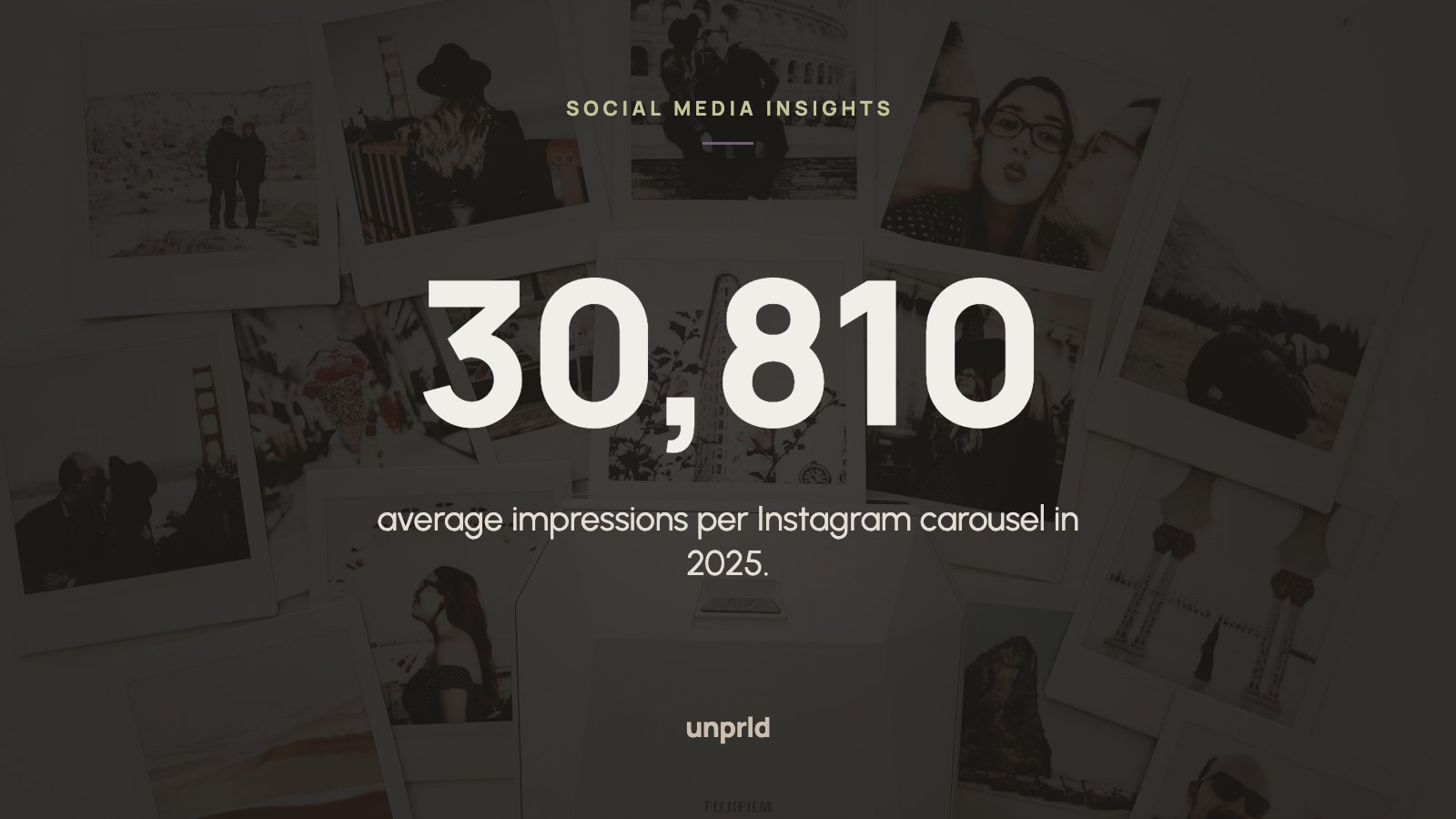
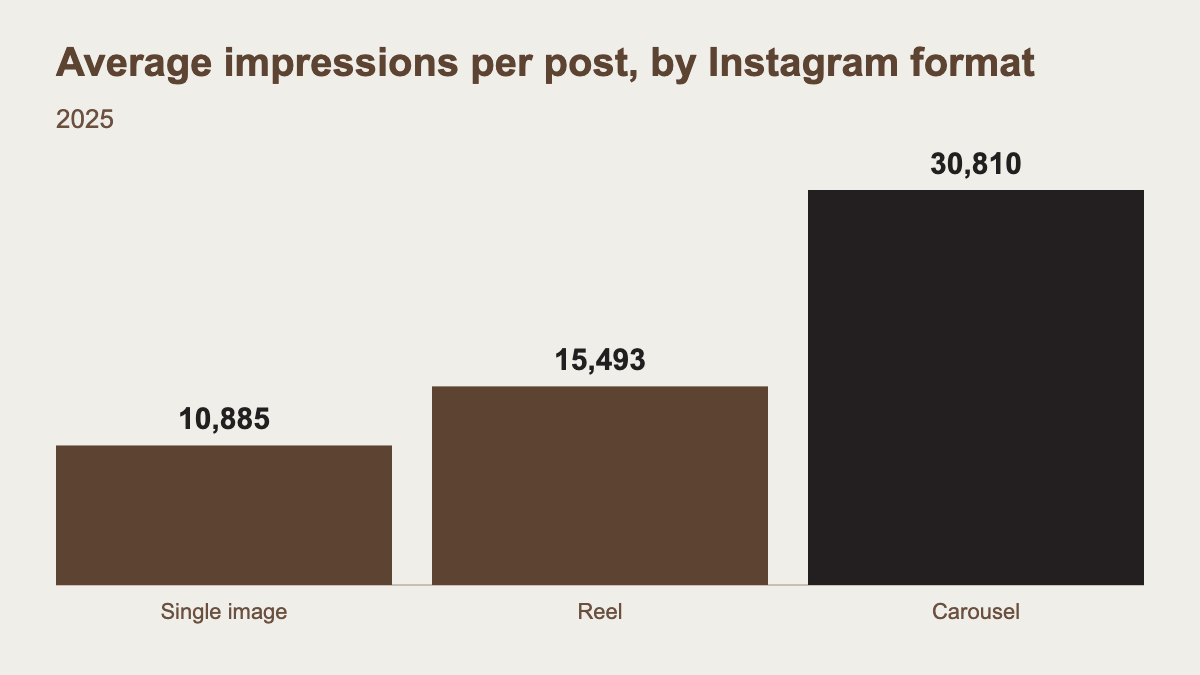
They were also, by some distance, the best performing. A carousel averaged 30,810 impressions against 10,885 for a single image and 15,493 for a Reel. Reach was 10,003 accounts per carousel against 4,789 for an image. Interactions were 795 per carousel, more than three times the 235 a single image earned, and ahead of Reels at 624.
The reason is not mysterious. A carousel gets shown more than once. Someone who swipes but doesn’t finish is served the next slide later. Every swipe counts as a signal. The format rewards the viewer for staying, and rewards the account for building something worth staying for.
What it means for a South African business
A carousel suits a business with something to explain: a process, a before and after, how a price is made up, a menu, a piece of work from brief to finish. Most SMEs have far more of that material than they have dance-worthy Reel ideas. It is also the format best suited to a considered brand, because it slows the scroll rather than competing with it.
One honest caveat. Carousel reach also fell in 2025, down 35% like everything else. This is not a format immune to the crowding. It is the format that holds up best inside it.
What we’d do
One carousel a week, built like a short essay. The first slide is a headline that earns the swipe. Five to seven slides carry one idea each. The last slide closes softly. Keep the palette calm and the type consistent, because a carousel is read, not glanced at.
Data: 2026 Social Media Study, 39.7 million posts across 1.06 million business accounts, 2025 compared with 2024.
Keep reading
More insights
Most brands haven’t personalised their email marketing. They’ve just automated the greeting.
AI made content free to produce, which is exactly why having something true to say is now the only thing worth paying for

Stock photography is the marketing shortcut that’s quietly costing you engagement

South Africa’s diversity is a marketing advantage most local brands still treat as an afterthought
