

There is a specific kind of content flooding every feed right now, and you can usually spot it within a sentence or two. It’s competently written, correctly formatted, technically on-brief, and says almost nothing. Not because the tools that made it are bad. Because it was built to fill a slot, not to make a point.
That’s not a fringe observation anymore, it’s the mainstream state of the industry. A 2026 global survey of more than 1,500 marketers found that 61% believe marketing is going through its biggest disruption in twenty years, driven by AI. That’s more than six in ten marketers agreeing something fundamental has shifted. The evidence backs it up structurally too: 80% of marketers now use AI for content creation, and 75% use it for media production. AI hasn’t crept into marketing. It’s the default tool in the room.
Everyone has the machine
Here’s the part that should genuinely change how a business owner thinks about their marketing budget. Despite AI being everywhere, only 46.8% of marketers say they’re actively exploring how to apply distinct brand values in their own marketing, and just over a third, 35.4%, strongly agree their brand has a clear point of view. Read those two numbers together and the picture is stark: the tools to produce content have never been more accessible, and the number of brands using that access to actually say something distinctive has never been lower. Everyone has the machine. Almost nobody has decided what to say with it.
That gap is the opportunity, and the same research points straight at it. 62.7% of marketers now believe unique, human-centred content is necessary just to stay competitive, not as a nice-to-have but as table stakes. And 73.4% see AI as something that assists marketers rather than replaces them, which lines up with what’s actually happening: AI is handling the mechanical parts of production while the strategic part, deciding what a brand actually stands for and how it sounds, remains stubbornly human. One senior marketing leader involved in the research put it bluntly: more content today is generated by AI than by humans, but most of it is average, and learning actual craft matters more now, not less.
Why volume stopped being an advantage
For a South African business owner, this changes the calculation on where marketing spend should go. The old logic was that more content, produced faster and more cheaply, was the path to visibility. AI has broken that logic completely, because if speed and volume were ever going to be the differentiator, they stopped being one the moment every competitor got access to the same tools at the same low cost. When everyone can produce infinite content instantly, infinite content stops being valuable. What doesn’t stop being valuable, and what the numbers above show most brands still haven’t built, is a specific, consistent, recognisable point of view that a customer can tell apart from every other business in the category.
What we would do about it
Not abandon AI. That ship has sailed and there’s no reason to want it to, the efficiency gains are real. What we’d do is treat brand strategy as the thing that has to happen before any AI tool touches a keyword, a caption or a media brief, not after. That means defining, in writing, what your brand actually believes, how it differs from the three competitors a customer is most likely to compare you against, and what tone of voice is genuinely yours rather than generic industry-speak that any AI model would produce by default if you didn’t specify otherwise. It means auditing your last six months of content and asking honestly whether a competitor’s name could be swapped into it without anyone noticing. And it means accepting that the businesses who will stand out over the next few years won’t be the ones producing the most content. They’ll be the ones whose content nobody else could have written, because nobody else has their perspective, their history, or their reason for existing.
That’s not a defensive argument against AI. It’s the argument for why brand strategy, distinctiveness and a defined voice, the part of marketing that can’t be automated into sameness, matters more now than at any point in the last twenty years.
Sources: HubSpot, 2026 State of Marketing Report and 2026 state of marketing: data from 1,500+ global marketers.
Keep reading
More insights
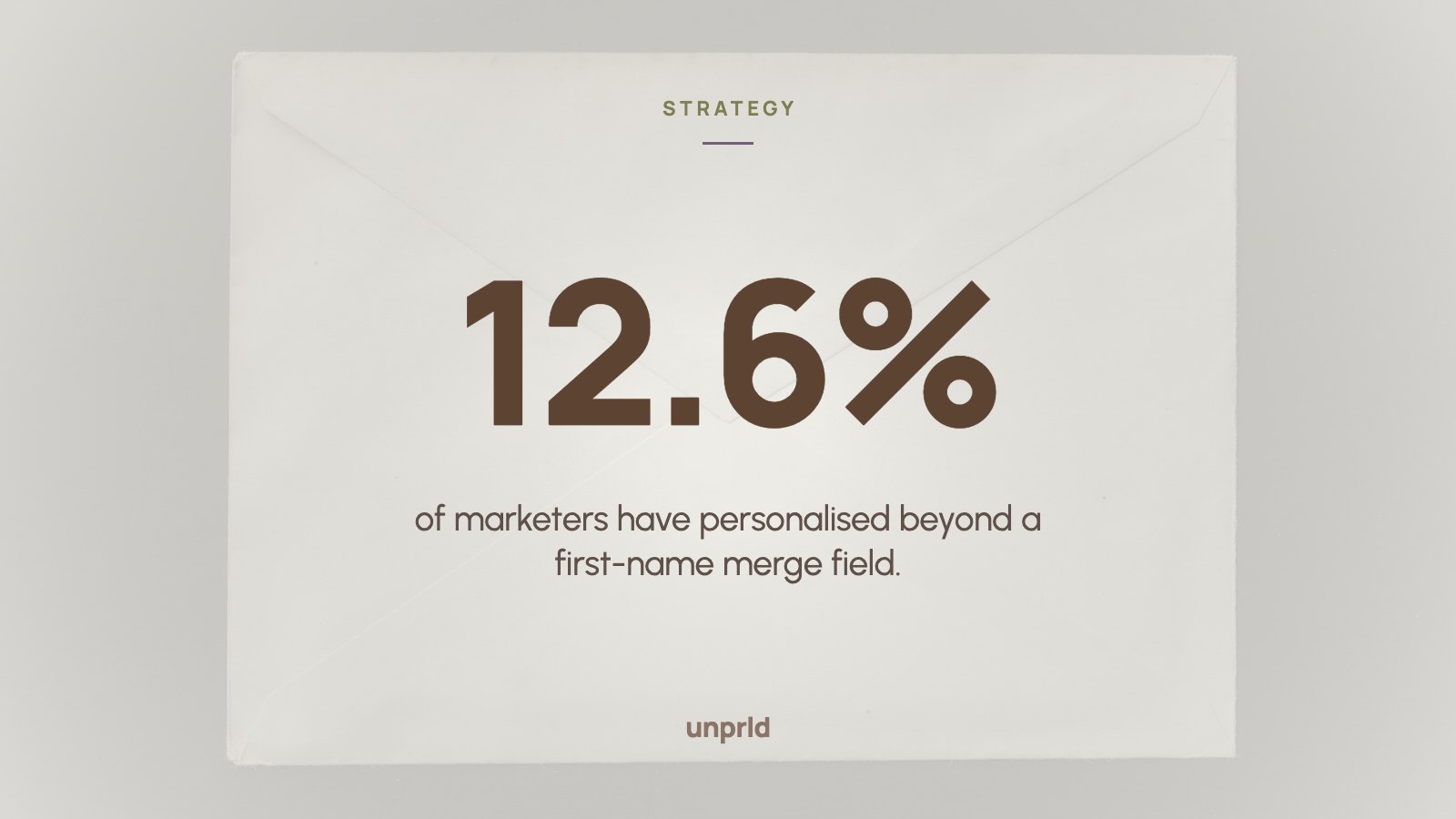
Most brands haven’t personalised their email marketing. They’ve just automated the greeting.
AI made content free to produce, which is exactly why having something true to say is now the only thing worth paying for
Stock photography is the marketing shortcut that’s quietly costing you engagement

South Africa’s diversity is a marketing advantage most local brands still treat as an afterthought
